Patient Parenting 101

Easy behavior modification techniques to change the way you parent.

Easy Mindfulness Techniques Part 2: Visual

glitter jarWeek 2: Calming Glitter Jar

Everyone can benefit from a calming glitter jar. Shaking, turning and watching the glitter settle actually allows your body to receive important sensory input (visual and tactile) needed to organize thoughts, refocus attention and “rewire” your nervous system. Aside from all of the scientific reasons why it works to calm the brain, it is tons of fun, beautiful, inexpensive and easily accessible.

This jar can be taken out when a child is upset, frustrated or angry. This technique of redirection avoids all punishments. Instead it distracts and redirects the brain in a calming manner. Once the glitter has settled you can have a brief conversation about the emotions that were present. Many times a child gets frustrated and angry when they are not able to communicate effectively. It is our job to teach them effective and appropriate ways to do so.

Ingredients: (items can easily be purchased at a Dollar Store)

1) Plastic Bottle

2) 2 Tablespoons of glitter glue (your child’s favorite color)

3) an inch of extra glitter

4) 1 cup hot water

5) small figurine or toy (lego figure, doll)

Instructions:

Add items to clean plastic bottle in order. Leave an inch of space at the top for shaking room. Glue lid on bottle. Shake!

*The glitter can take anywhere from 1-5 minutes to settle. As it settles you will notice that your child can become “entranced” in the magic like qualities of the bottle – that is the brain relaxing 🙂

Enjoy!

Leave a comment »

Easy Mindfulness Techniques Part 1:

MINDFULNESS.

Our brain is the most complex thing about us.

We each need to take time to learn how to be the captain of this ship.

Week 1: Breathing

“One deep breath can change our world.”
-Oprah (or one of Oprah’s writers).

Regardless of where the sentiment comes from it is a very powerful statement indeed. If we think about our child’s brain development, we see that there is a gap in the education of their overall well- being.

Teaching mindfulness to our children from an early age will give them the tools that they need to develop emotional maturity, understand how their brain and body work and develop a deeply connected sense of self, safety and happiness.

Each week we will focus on one easy technique to teach our children (and perhaps ourselves) to bring our families into a state of mindfulness and wisdom about ourselves.

I have talked about breathing techniques before. I talk about them a lot because they are important, infinitely handy and free! You have to focus to do a deep breathing exercise, this is being mindful. Every person can deep breathe to change the chemistry of their body and brain at any given moment. Even one deep breath taken in a stressful situation has been scientifically proven to lower heart rate and blood pressure.

BUBBLE BLOWING BREATH:

1) Have child breathe in through their nose for 3-4 seconds
2) Release breath through mouth slowly
3) Wait 2 seconds
4) Repeat

bubbles

*Practice this technique with your children by actually blowing bubbles with them. The same breath is used, hence the name. You can even tell them to “blow bubbles” as a reminder to use their new breathing technique in a stressful situation.

Leave a comment »

Good news about whining!

Whining is a learned behavior. Yes, that IS the good news. It means that whining can be UNLEARNED 🙂

It is difficult to be patient when our children are whining. All children will test out this method and usually when we are on our last nerve. It is our job as parents to teach them a better, more appropriate way. We have all given in to the demands of a whining 3 year old  when we were tired, overwhelmed or distracted. If we give in our child will stop whining in that moment, but also learn that this technique works as a means to an end. This guarantees your child will continue whining in the future.

Some ways to nip whining in the bud:

1) Do not be a pushover. Every time your child whines and you feel tempted to give in to quiet the chaos, picture your child as a 12, 15 or even 18 year old whining. I guarantee that you will not picture this as a pretty sight and certainly not an age appropriate behavior. It will appear a bit ridiculous and will remind you in the moment to address it rather than letting it go on (“just this one time”).

adultwhining

2) Teach your child the proper way to use their words. If they are whining because they want to watch a TV show tell them in a calm voice “You can say Mom may I watch TV now? in this voice”. Model the correct voice for them.

3) Once the calm voice technique is taught you can remind them that they are whining by saying

“I am happy to give you an answer as soon as you use your calm voice”.

4) Stay consistent. Possibly the hardest, but definitely the most effective step.

Patient parent on 🙂

parentteachingpic

Leave a comment »

One Positive Thing You Can Say to Your Child Each Day This Week:

family-hands-heart

1) YOU MAKE ME SMILE 🙂

2) I ENJOY YOUR COMPANY

3) I BELIEVE IN YOU

4) YOU ARE LOVED

5) I’M SO GLAD YOU JUST WALKED INTO THE ROOM!

6) YOU HAVE A BEAUTIFUL HEART

7) I’M GRATEFUL YOU ARE IN MY LIFE

Leave a comment »

Hitting Hurts Everyone


fist

Sometimes our children hit. Developmentally they may be at an age where they do not know any better. I remember the first time I got a call from Liam’s pre-school telling me to come pick him up because he hit his classmate. My face was so red with embarrassment and I, in turn, was angry at Liam for hitting someone. But then I realized that I had not taught him a better way yet and I learned a technique that has since come in handy many times with him, my students and in my life as an adult as well (as an anger management tool). When we know better, we do better. We must teach our children that hitting is not okay. Ever.

“That kid stole my toy!”, “No, I don’t want to!”, “My brother is in my space!”. While anger is a legitimate emotion, try to remember that it is a secondary emotion that almost always comes AFTER frustration and/or disappointment. We can all remember being in a situation where we were frustrated (“That driver cut me off!”) and/or disappointed (“He told me he would be here on time for my game.”) and we may have acted out in anger toward the person.

The techniques you teach your child now will come in handy for the rest of their life. It is important to teach these techniques to your child while they are calm and safe. Never try to “reason with” a child in the heat of the moment or right after they have hit someone. It will be lost on them. What you can do (teach) instead:

Pick a quiet, safe spot. It can be a beanbag chair, a pillow on the floor, a quiet corner in the family room. Bring your child there and teach them a self calming technique. Model the technique and make it part of fun time.

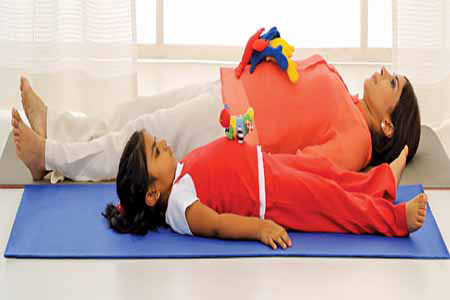
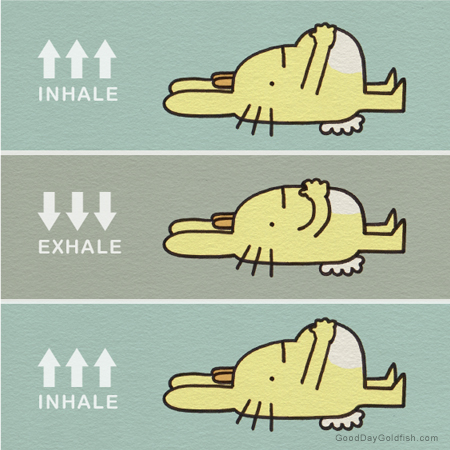
Belly Breathing: Lie on floor. Hand on belly. Mouth closed. Breathe in through your nose and feel your belly rise. Out through your mouth and feel your belly fall. You can also put a stuffed animal on your child’s stomach.

Count to 10: Count to ten in your head or out loud using your fingers.

There are many calming exercises you can teach your children. Maybe there is even a go to one that you use when you are feeling angry and frustrated.

I highly recommend the Breathe, Think, Do app by Sesame Street for children. It is an interactive app and lets them work through many different real life scenarios. They can “play” this anytime. Shhhh, they are actually learning.   Breathe 2 Relax is also a great app for older children. They can custom organize it. YouTube also offers many great breathing/calming tutorials.

             belly2

Now, what to do when they hit:

1) Put them in their quiet corner. This is important. It teaches them that a timeout can be helpful. Even as an adult. (If you are out find a quiet place).

2) Get down to eye level and tell them calmly why they are there. “I can see that you are angry, but we do not hit. You can breathe (count to ten, stretch) instead.”

3) Walk away and set the timer to one minute per their age. Do not stress if they are not using one of the calming techniques each time, as long as they are sitting quietly they are calming themselves.

4) When timer goes off and you see that the child is calmer (they may need to be placed calmly in this space several times before they sit for timer) you can then talk about what they can do differently next time instead of hitting. “You can use your words and tell your friend that you do not like when he takes that toy out of your hand”. “You can come to your quiet corner and belly breathe.” “You can tense up your muscles and then relax them like we practiced”.

5) Take them to apologize to the person they hit.

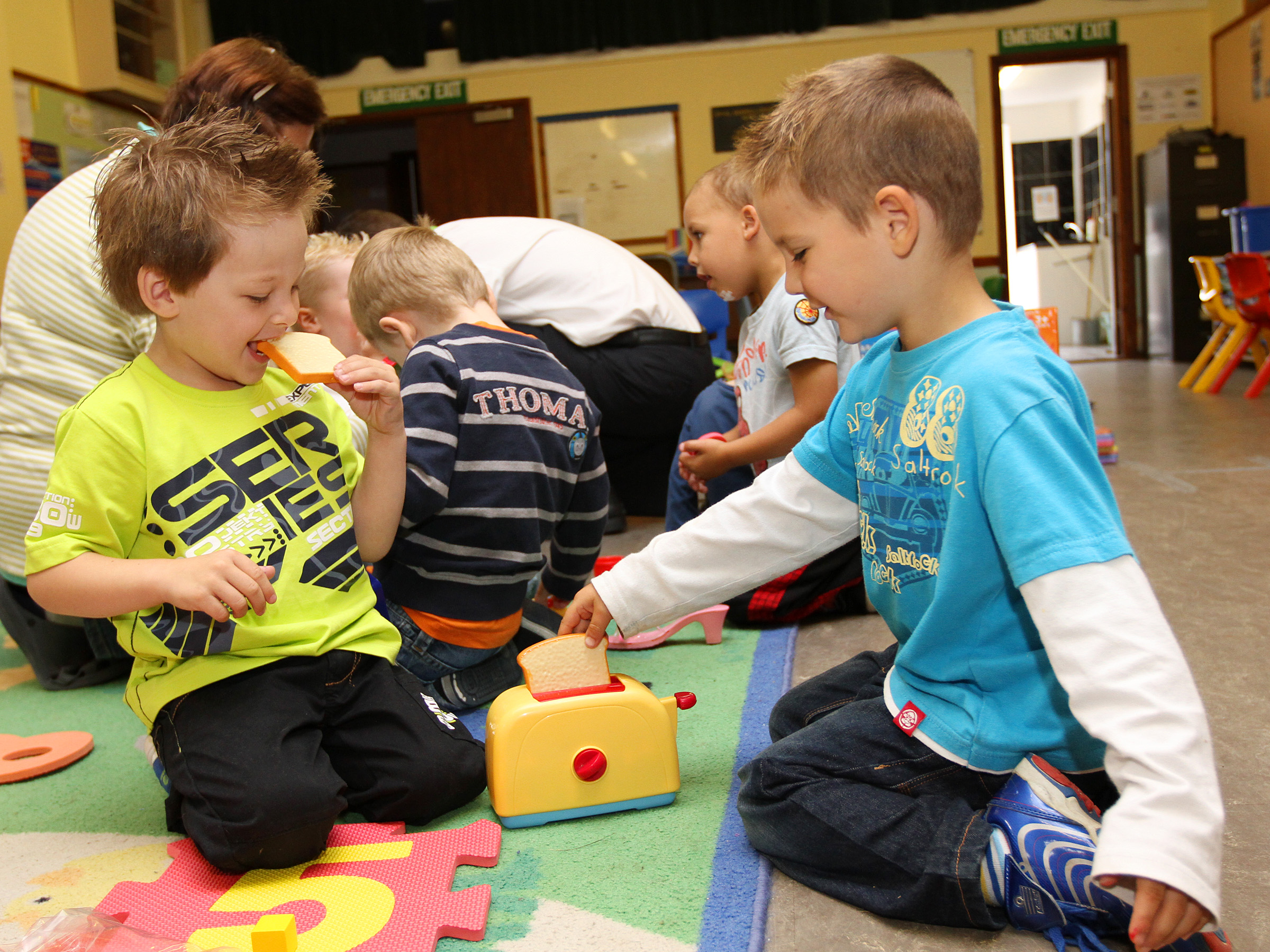
toast

NOTE: I never advise my students to hit a pillow as an alternate behavior when angry. While anger is an emotion that should be named and dealt with, hitting is an aggressive physical manifestation that can cause an adrenaline rush and it defeats the purpose. It also teaches that hitting inanimate objects is okay in the heat of the moment. This can cause many additional problems and has not been shown to be an effective way to deal with anger.


Leave a comment »

Back to School Positive Reinforcement Tips!

Back-to-SchoolIt is that time of year again. The lazy days of summer are behind us and we now jump into the sometimes hectic routine of school, after school activities, sports, music lessons and homework. The good news is that we can help get our children organized and get them to feel good about it.

As most of you know I am a big supporter of all things POSITIVE. Especially as it relates to and shapes our relationships with our children and family. Human beings respond well to being noticed, being told they have done well and being validated. They will seek out this positive attention and behave accordingly.

Positive Reinforcement comes in many forms and should be practiced daily with our children. There are verbal and nonverbal reinforcers that we can use with our children to help get them organized and motivated for a great school year.

Verbal reinforcers should come freely:
“Wow you got dressed quickly this morning!”
“I like how you laid your clothes out and got your backpack ready last night. That was helpful.”
“I love how you put reminders on your phone to get to practice on time”. That was very clever.”

Nonverbal reinforcers can include:
Hugs, a pat on the back, kisses (though your teen may squirm they do appreciate it).
Giving your child extra video game time for completing their homework. (Choose any activity that truly motivates them).
Earning stickers on a chart to get a prize.

Positive words that you can use: helpful, organized, determined, intelligent, considerate, clever, strong, friendly, kind.

You can even make a list of positive words that you would like to be able to use to describe your children when they are adults. Use these words daily so they are absorbed into your child’s self esteem and self concept as we did above with the verbal reinforcers. Self concept becomes a tape reel in their heads and they will refer to it often as they grow. An example may be,
“I am going to keep track of my daily homework assignments in this notebook because I am organized.”
“I will raise my hand in class because I am considerate.”

Remember what you praise is what you get! This will go a long way in avoiding arguments, homework meltdowns and school year chaos. Have a great year!

Leave a comment »

Chores help everyone!

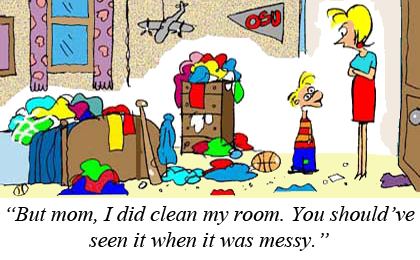
Chores are great for your children! They teach your children how to function once they are out on their own, they teach responsibility, they give your children a sense of pride and accomplishment and they foster a sense of family and teamwork!

Chores are a necessary part of life so the sooner you start to teach them the more grateful your children (and you) will be (they don’t know this yet 🙂 The key to success is to assign age appropriate chores. Chores should match a child’s physical and motor development and be safe. The brief  list below should help to get you started:

Ages 3-5

Dust with a hand puppet sock

Pick up their toys (make this fun by having them “race” against the timer or sort the items by color)

Pick up and deposit laundry into baskets

Clean their rooms

Ages 6-8

Collect inside trash into a large bag

Make beds

Carry Laundry baskets to laundry room

Set and clear the table

Ages 9-12

Empty and fill dishwasher/wash dishes

Rake leaves/shovel driveway

Wash the car

Fold and put away laundry room

Ages 13-17

Mow the lawn

Take garbage cans in and out to curb

Clean bathrooms

Operate washing machine and dryer

Prepare meals

You  can pick one day a week (we grew up doing most of our chores on Saturday mornings and that still works for us) and/or they can be an ongoing responsibility (garbage cans every Tuesday, set table every night). And don’t forget to reward, reward, reward! Set up a sticker chart for younger children that allows them to earn a special treat or outing. Older children can receive check marks to earn and determine the amount of their allowance  (this is a great lesson about working hard to earn money as they get older).

This link has great free custom chore charts that you can print out to get you started:

http://www.dltk-kids.com/type/printable_chorecharts.htm

*Warning – there may be a little whining when you get started and each chore may not be performed “perfectly” but that is okay – teach, be consistent with your expectations, be patient and then let it go…

chores

Leave a comment »

3 Things You Should Never Say to a Child (even though you may be thinking them).

We have all had moments of utter frustration while parenting where we want to pull our hair out and we think “Seriously?!”.  Patient Parenting comes when we do not react but when we take a deep breath and address our children with love and kindness and use these moments to teach.  I am sure we can all agree that we also want our children to grow up to be loving, self-respecting,  patient parents as well so we use our parenting tools to create a safe and kind environment for our children.

FACTS:

CHILDREN BECOME WHAT WE TELL THEM THEY ARE.

THEY WILL SPEAK TO US AND OTHERS AS WE SPEAK TO THEM.

So never tell a child:

1) “I LOVE YOU BUT I DON’T LIKE YOU RIGHT NOW”.  Parents usually say this when what they really mean is “I’m completely frustrated by your behavior right now!”.   While it is reasonable to think this you should never express it to your child in a hurtful way. Telling a child you do not like them is hurtful and depresses a child. It does NOT motivate them to behave better. They do not understand the reasoning behind this statement the way an adult can nor do they understand the link between their behavior and your comment. They will walk away thinking that it is the worst thing in the world that their parent does not like them and it will change who they are and who they become.  If a behavior is making you frustrated ADDRESS THE BEHAVIOR.

2) “THAT WAS STUPID”.   The child hears “You are stupid”.  Most likely this parent is frustrated with the outcome of a certain behavior. I heard a parent say this to their child this week and I saw the look of confusion and sadness in the child’s eyes; “Wow if my Mom thinks I’m stupid then I must be.”  Remember, children become what you tell them they are, so NEVER use the word stupid! A better, kinder way to approach this child would have been to say ” We need to sit down and come up with a better way for you to remember your homework so that this does not happen again”.

3)  “SHUT UP!”  This language is rude and hurtful (and, in my opinion, borders on verbal abuse). I can guarantee that you would never use this language at work (where it is deemed inappropriate and rude) so remember we should hold our children’s self-esteem to at least the same level (if not higher) and never use hurtful, close ended words like this with them. There are hundreds of other ways to ask your child to be quiet – “Please settle down”, “We need to use our inside voices”, “Do not talk back or there will be a consequence”, etc.  Find a polite one and use it.

There is no such thing as a perfect parent but with a little patience and solid parenting tools we can all do a little better.shadow

Leave a comment »

Steps for Successful Potty Training!

Most parents dread this topic but I am here to tell you, as a survivor myself and behavior therapist, that with some PLANNING and PATIENCE it will not be as stressful as you think! The REALLY good news is that almost 100% of typically developing children will master this necessary life skill by the age of 5 (Azrin & Foxx) – so you can take comfort in the fact that your child will most likely not be entering kindergarten in diapers 🙂


PREREQUISITE SKILLS:

It is best to wait until your child shows the prerequisite skills before you start toilet training. Minimum successful age requirement is 24 months. The age varies for most typically developing children but is usually between 3-4 years of age.

* Child is staying dry for 1 1/2 -2 hours at a time.

* Child is able to pull pants up and down independently.

* Child is having regular bowel movements (same time of day with regular frequency).

When you start teaching your child how to use the bathroom it is important to remember that bladder control comes before bowel movement control and nighttime bladder control.


WHERE:

Home is ideal. Try to plan toilet training around a time when you and your child will be mostly home for a period of about 2 weeks (school break or summer break).  Also it is not a good idea to plan it before a stressful event. If you know you are moving in the next three months or there will soon be the birth of a sibling wait until after this event.

If child is attending school or daycare during the toilet training period you must communicate your plan to the school. It is most helpful if there is one person at the school who will implement your plan consistently.


PREPARATION:

* Start reading picture books to your child about potty training (Once Upon a Potty and Big Kids Use the Potty are great examples). There are also apps available that you can play with your child  ( Potty Time is a great one!).  Most of these books show boys sitting on the toilet – this is the preferred method – boys should be taught to sit on the toilet until they are fully BM trained.

* Identify out loud when your child is wet with a neutral voice. You can say “You’re very wet.”

* Show them that poop goes into the potty. Empty the diaper into the toilet and say “Poop goes in the potty.”


GET YOUR TOOLS READY:

1) REINFORCERS!! Rewards should be immediate, highly motivational, tangible and ONLY used for toilet training (if you are using gummy bears or glitter stickers for potty training then the child cannot get gummy bears or glitter stickers at any other time or for any other reason during the day).

2) Pull-up diaper pants. These mimic underwear and are the most practical item to use, especially if child is having a lot of accidents.

3) Small floor potty or step stool. Child’s feet should always be touching something (ground or stool).

4) Timer.

5) Juice or water.


AND GO! :

1) Increase consumption of liquids. This should be a steady increase, not all at once. This allows for more opportunities of voiding into the toilet. Check with your doctor first to determine correct, safe amount.

2) Schedule potty time. Start with 2-4 times per hour. Set timer. When timer rings bring your child to the toilet while saying “Time to go to the bathroom”. Have child pull down his/her pants and sit on the toilet. If they void into the toilet say “Great job!” and give them a the REWARD!

3) DO NOT punish or criticize accidents if they occur in between the timed intervals. Have the child clean or change his/her clothes and then walk child from the spot of the accident to the toilet anywhere from 3-10 consecutive times and each time say “We pee and poop in the potty”. Use a neutral tone of voice. This is called Positive Practice.

4) Slowly increase the time between intervals and decrease liquid consumption to normal levels. Give a REWARD each time child voids into the toilet making an extra special celebration if they request and go independently. Children love to see their parents dance and sing and make silly faces – this is the time!

5) Once child is urine trained you can focus on BM training. Use the same technique but up the REWARD to something the child “would die for”!


NIGHTTIME TRAINING:

* Once the child is fully daytime trained you can implement nighttime training. This would be when the child wakes up 5 days in a row completely dry.

* Stop using pull-ups. The child should now be in regular underwear. This can be a huge celebratory event and you can take the child shopping for their favorite character underwear!

* No liquids within 2 hours of bedtime.

* Institute a regular bed time and wake time.

* Toilet immediately upon waking.

* Take child to bathroom if he/she wakes in the night.


TOILET ACCIDENTS after training is complete:

* An occasional accident happens to all children. It is normal. Do not make a big deal about in front of  the child.

* Rule out medical issues, dietary changes and/or stressful family events (the hurricane was a big one, relocation, etc).

* If these behavioral techniques do not work check with your doctor or pediatrician to rule out medical issues or elimination disorders.


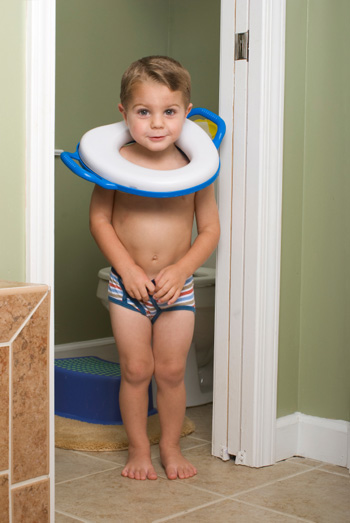
That’s it! Good luck – you got this!!potty-training-boy

Leave a comment »

Rules for a TIME OUT:

Based on the theme of exasperated posts I have seen this morning it looks like it was a tough parenting weekend for a lot of people. Maybe now is a good time to review the rules for a productive, successful Time Out.

Time Outs can be used very effectively in your home. First make sure the house rules are clear. You can post them on the fridge or elsewhere or review them verbally with your children every so often. Clear, consistent rules are the most effective way to teach children. If your child breaks a rule (We do not talk back, We listen to our parents. etc) then they should be placed in a safe, assigned “time out” space (a chair, the bottom step, etc).

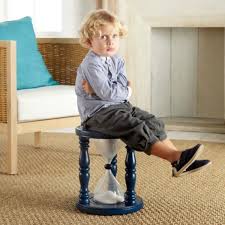
1) Place child in time out location for a period of 2-10 minutes in length.  Age is a good indicator.

2) Explain time out rules to child: “You are in a time out for 4 minutes because you broke a house rule and you hit your sister, we do not hit. You are to sit quietly in this spot until the buzzer rings”. Each escape attempt resets the timer.

3) When buzzer rings the child is then allowed to get up and should apologize to you or to his/her sister. No hugs, kisses or other “lovies” should be given at this time as it may inadvertently reinforce their attempts at getting a time out for the sole purpose of  receiving affection from Mom or Dad (kids are wicked smart!).

4) Use your technique CONSISTENTLY (I cannot say this word enough – it is the basis of patient parenting. If you are inconsistent your child will become confused and/or test the boundaries even more). Both parents must use the same technique.

Let me know if you have questions. Good Luck! time out

Leave a comment »

NJTODAY.NET

Your neighborhood in print since 1822

Breastcancer.org Blog

Easy behavior modification techniques to change the way you parent.

VandogTraveller

Easy behavior modification techniques to change the way you parent.

Fill Your Own Glass

A realistic approach to an optimistic life